What Can Private Networks Contribute to the Future of Agriculture?
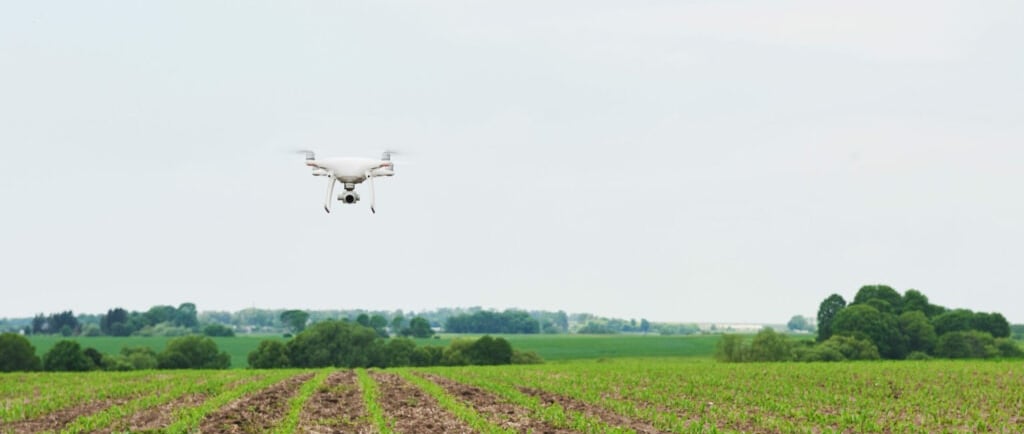
Private networks applied to these technologies ensure connectivity during transit, enable the collection of massive amounts of data to optimize decision-making, and provide real-time information from operations centers to remote locations to improve farm surveillance, crop health monitoring, livestock health supervision and tracking, and workforce management.
An Experiment with Self-Driving Tractors
Tractors are synonymous with plowing farmland, and since their inception, they have been operated by people. If the human is removed from the driver's seat, an autonomous tractor could tirelessly plow the same land. If some artificial intelligence (AI) and location tracking are added to help determine its trajectory, achieving the desired efficiency could become even easier.
That is what researchers at Harper Adams University thought while running an experimental farm called Hands Free Hectare in the British village of Edgmond in 2016. It all began with one hectare on which they operated a 25-year-old tractor and a combine harvester that had been converted into autonomous vehicles equipped with cameras, lasers, and GPS systems.
Strict rules prohibited stepping on the soil. Thus, while the two vehicles prepared the ground, sowed the seeds, and maintained the crops, those leading the project used drones to collect soil and crop samples. The drones even monitored for weeds and pests.
Since then, new funding expanded the farm to 35 hectares and three self-guided tractors in 2019. However, instead of a "perfect hectare," the project sought to challenge the AI-driven machines with more "real-world conditions," including obstacles and uneven paths. The original hectare harvested two seasons of grain without any manual labor, marking the first time this had ever been achieved anywhere in the world. The current expansion should yield results with other crops as well.
The Contribution of Private Networks to Smart Fields
To be effective, agricultural robots and smart vehicles require ultra-low latency to determine, for example, which plants are weeds and act quickly. This is where private networks, combined with 5G, will make the difference.
Private wireless connectivity ensures that remote farms remain connected when WiFi network coverage is insufficient and enables the deployment of smart agricultural applications for real-time data analysis. Furthermore, using a private network facilitates machinery movement, as it is not restricted to a limited coverage area (as is the case with WiFi).
With high reliable capacity for machine-to-field communication and low latency for machine-to-machine connections, smart fields can benefit from applications such as field robots, automated drone flights, automated driving, vehicle fleet tracking, and more.
Among some of the most notable capabilities, massive amounts of data can be collected from fields, barns, greenhouses, and other agricultural facilities through remote inspection. A large volume of information can also be delivered from operations centers to remote locations to improve farm surveillance, crop health monitoring, livestock health supervision and tracking, and workforce dispatching and training.
Additionally, by combining GPS, sensors, and imaging, decisions related to how to deploy robotic vehicles that till the land can be improved. Moreover, as more machines and processes are automated, a centralized solution in an operations center can operate multiple machines in the field, making suggestions and transmitting additional information.
Is It Feasible to Extend This Model to More Farms?
In general, agricultural experts agree that making this a reality at scale will require the commitment of multiple stakeholders. To begin with, the world's largest agricultural equipment manufacturers would not only have to embrace the development of autonomous machines but also the AI technology that smaller development companies are working on to make them more intelligent.
For its part, John Deere unveiled a self-driving tractor prototype and an autonomous sprayer in October 2019, offering a glimpse of how machines can handle more aspects of the heavy lifting for crop harvesting.
Blue River Technology, acquired by John Deere in 2017, created See and Spray, a device that uses cameras, machine learning, and AI to detect weeds in fields. The machine has the ability to spray pesticides, fertilizers, and fungicides. This technology can help farmers reduce the amount of weeds among their crops by up to 90% within a few years.
Paysandu 926CP 11100MontevideoTel: +598 2902 1477
© 2025 Isbel S.A., a Quantik® brand
Av. Ana G. Mendez 1399, km 3PR 00926San JuanTel: +1 (787) 775-2100
Carmen C. Balaguer 10El Millon, DNSanto DomingoTel: +1 (809) 412-8672
Follow us
Our Policies