What Is Open RAN and Why Could It Be Decisive in Accelerating 5G Deployment?
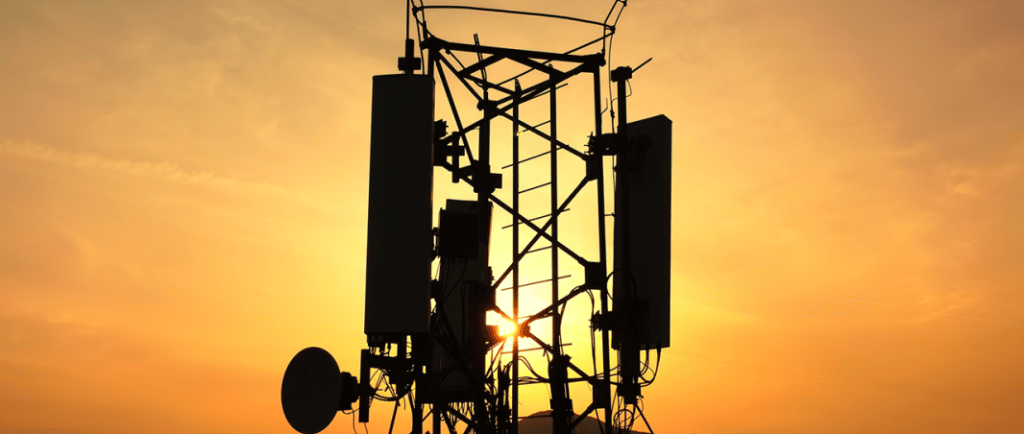
An opportunity for telcos seeking new ways to monetize their infrastructure.
What Is Happening with 5G?
The first commercial deployments of 5G are already a reality in some countries, but this technology is still under development in most of the world. Deploying 5G networks is an enormous challenge, primarily because of the high investments required.
For this reason, telcos are compelled to seek new ways to monetize their infrastructure that add value. One option is to offer new services to different verticals. If one thing is clear, it is that 5G will not be solely for end consumers but also for enterprises and their business processes.
Every 8 to 10 years, with each generation (2G, 3G, 4G, 5G), telcos face a very strong investment push. To survive now, they must launch 5G, and doing so while optimizing costs is one of the key drivers behind Open RAN.
What Is (and What Is Not) Open RAN?
Open RAN introduces the concept of hardware and software disaggregation, which enables, among other things, different vendors to provide hardware and software elements, thanks to the standardization of interfaces.
Traditionally, the telecommunications world has been dominated by four major companies, the vendors: Ericsson, Nokia, Huawei, and ZTE. These are the companies that until now manufactured both the hardware and the software in telecommunications, in many cases as closed packages that are very costly for telcos to acquire.
To draw a comparison with the mobile phone world (allowing for some differences), the traditional vendors are like Apple, which sells its phones (hardware) with its operating system (software), as opposed to Google, with its Android operating system (software), which is installed on different mobile devices.
In telecommunications, the "Apple model" was the traditional one, meaning that every change a company wanted to make had to be requested from the vendor. This required significant investment and adapting to the manufacturer's timelines, which tends to slow innovation. The argument behind this system is that it involves critical infrastructure that must function flawlessly. For the telecommunications industry, the standard is what is known as "five 9s of availability," meaning the system must be operational 99.999% of the time, which translates to accepting an average of less than 6 minutes of downtime per year on a cellular network.
But with Open RAN, the landscape opens up. The leading telcos in Europe, Asia, and the United States are promoting this movement, based on a standard that allows any company to develop both software and hardware technology. The main proponents of this concept created the O-RAN Alliance, a worldwide community of cellular operators, manufacturers, and academic and research institutions.
Open RAN refers to the use of open interfaces and software virtualization to implement the Radio Access Network (RAN). In this way, the different software functions can be installed on general-purpose hardware or specific-purpose hardware in terms of interfaces, processing capacity, and memory, but with a generic hardware design.
This disaggregation enables software development with a high degree of independence from the hardware, making it possible to implement new technologies more quickly and not necessarily through costly hardware changes. It also encourages the emergence of new manufacturers in the ecosystem, in addition to the large traditional manufacturers who are now joining this line of business. Some focus specifically on software, others on hardware, and others on both.
Since these are open interfaces, it is possible for some software functions to be implemented with one manufacturer and others with a different one. At the same time, many company alliances are forming, some involving well-known and established names in the IT industry. Ultimately, for the operator, a world of options opens up that is much more varied and competitive than before.
What Is Happening Around the World and in the Region with 5G and Open RAN?
Something very interesting is taking place in the United States market. Following the merger of Sprint and T-Mobile in 2018, only three major telcos remained, alongside Verizon and AT&T. In that context, Dish Networks emerged as a fourth competitor, determined to become a pioneer in all technological trends related to 5G. Dish set itself the goal (mandated by the U.S. regulator, the FCC) of reaching 20% of the market with 5G by June 2022. It managed to meet this target just hours before the deadline set by the regulator.
This accelerated deployment, which involved bringing 5G to more than 120 cities, was possible in part because they used Open RAN, with a highly varied ecosystem of vendors and technology partners, in contrast to the traditional strategy. Choosing the Open RAN path gave them more alternatives at a time when the supply chain and delivery timelines are a decisive factor in technology projects. The company then set out to reach 70% of the market by 2023, an enormous challenge. They would need to turn to new options to meet their objectives.
There is also progress in our region. In Colombia, operators such as Tigo have already begun their Open RAN trials to cover rural areas more efficiently. There, they tested a new technology in areas where connectivity is not easy to deliver, at a cost more suitable for the return on investment and, in turn, with less impact on performance in case it did not work as expected.
Meanwhile, various operators in Chile, the region's leader in 5G deployment with more than one million 5G customers, are actively exploring Open RAN.
What Are the Challenges?
Opening the field to multiple vendors presents challenges that telcos must address. For this reason, Open RAN represents a unique opportunity for technology integration companies. Having detailed knowledge of the different hardware and software components across the entire architecture will become increasingly necessary.
Technology integrators that can rapidly acquire these capabilities will have a competitive advantage of great value to telcos.
Paysandu 926CP 11100MontevideoTel: +598 2902 1477
© 2025 Isbel S.A., a Quantik® brand
Av. Ana G. Mendez 1399, km 3PR 00926San JuanTel: +1 (787) 775-2100
Carmen C. Balaguer 10El Millon, DNSanto DomingoTel: +1 (809) 412-8672
Follow us
Our Policies