5G Technology Is Already in Uruguay: Does It Have an Impact on Health?
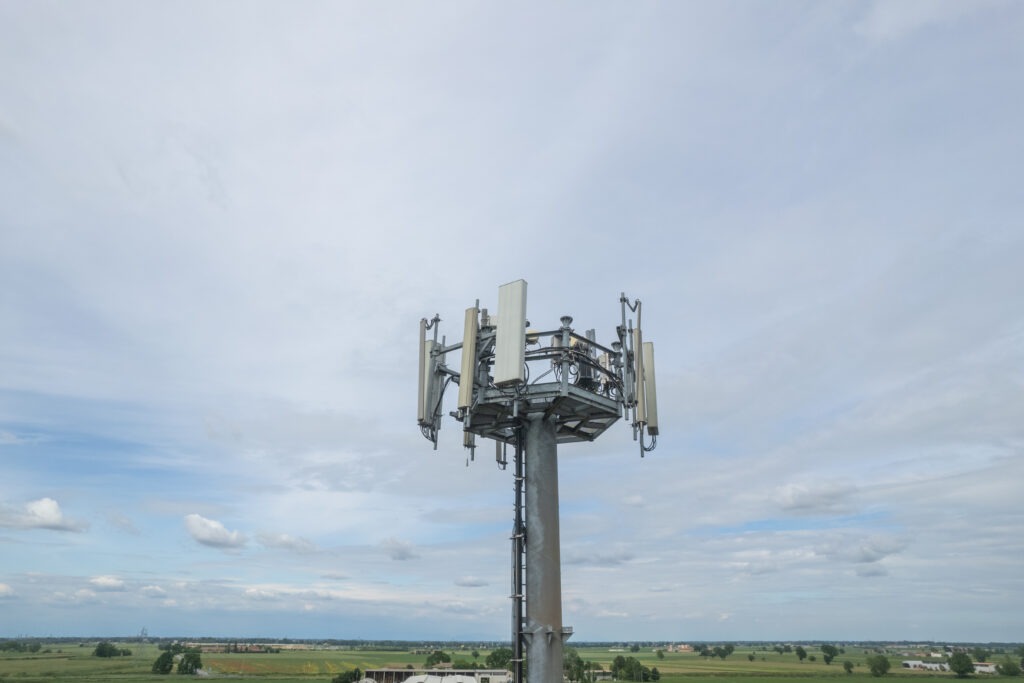
Despite its benefits, questions have resurfaced about the link between 5G and human health. What do we know about this?
5G cellular technology has been available in Uruguay for some time now. This deployment will allow users to access higher data upload and download speeds, while for telecommunications providers it means the ability to offer low-latency networks, greater connectivity capacity (more devices connected simultaneously), and improved energy efficiency, preparing the infrastructure that will enable new applications, connectivity use cases, and services.
Despite its benefits, questions have resurfaced about the link between 5G and human health. What do we know about this?
What the Scientific Evidence Says
The potential health effects of electromagnetic emissions have been a subject of study for decades. Before addressing the discussion, it is important to distinguish between non-ionizing radiation (radio waves, microwaves) and ionizing radiation (X-rays, for example). The latter has been proven to be harmful to health.
For the former, however, there is not sufficient scientific evidence to confirm that it affects health.
Numerous independent research studies exist on this topic (for example, those compiled in this World Health Organization document). These studies were conducted over several decades, across different parts of the electromagnetic spectrum, in different populations, and none has demonstrated that exposure to electromagnetic waves in the spectrum region used by cellular technologies (2G, 3G, 4G, 5G) is harmful to health.
As a precautionary principle, the International Commission on Non-Ionizing Radiation Protection (ICNIRP) has defined recommended emission limits.
A Key Point to Understand
Cell phones have the ability to receive signals at very low power levels. That is, high-power radiation is not required for communication purposes.
Today, the power levels in use are far below the limits considered safe (based on the precautionary principle), according to the scientific studies conducted.
Nevertheless, some recommendations can be highlighted for using cell phones responsibly, such as activating the speakerphone or connecting headphones to keep the device away from the body during calls. And, in general, not keeping it on your person at all times; for example, placing it on a table when at home or in the office.
By:
Mauricio Gonzalez, Product Line Manager for Telco Technologies at Isbel.
Mauricio is a Telecommunications Engineer from Universidad de la Republica. He has more than 10 years of experience in telecommunications across various roles including support, implementation, project management, and sales engineering.
Is There a Significant Health Difference Between 5G and Previous Technologies?
The level of radiated power decreases as we move away from the transmitter antenna. If we analyze cellular communications from the user's perspective, we can state that virtually always, the user will receive more radiation exposure from their own cell phone than from the mobile operator's base station.
On the other hand, many 5G deployments operate on the same or similar frequencies as previous technologies such as 4G, 3G, or 2G. In the case of Uruguay and much of Latin America, the mass deployments that began in 2023 are in the 3.5 GHz band, which for these purposes does not differ significantly from previous technologies operating in the 700-2600 MHz range.
The novelty of 5G is that it also includes deployments at higher frequencies (millimeter wave or mmWave bands), always within the non-ionizing portion of the electromagnetic spectrum. These higher frequencies mean that, on one hand, the signal attenuates more quickly with distance and, on the other, the depth of penetration of the electromagnetic wave into the human body is considerably less.
Along with this, it is expected that a greater number of antennas will be installed compared to previous technologies. In the case of mmWave, it will likely be used in specific scenarios with very limited coverage, since the power from these base stations decreases rapidly with distance. While more antennas will be necessary, the radiation will be more contained. In general terms, this does not represent a significant difference in airborne radiation levels compared to other frequencies already in use. Ultimately, we can dispel the myth that "more antennas means more radiation."
Another point is that 5G was designed with a focus on efficient power use. In this regard, there are new features that allow the cell phone to remain in standby mode while the communication channel is not being used -- something that already exists in 4G but has been substantially improved in 5G. This means lower electromagnetic radiation for certain data traffic.
In summary, there are no substantial differences compared to previous technologies in terms of health impact, except for the use of higher frequencies, which have been used for some time in other technologies and remain within the non-ionizing frequency range.
A Technology That Will Drive Innovation
5G is already a market reality in Latin America and particularly in Uruguay. The year 2023 was a very important one, as telecommunications companies commercially launched their networks on a mass scale. It is important to stay informed about advances related to digital transformation and telecommunications. Closely following the impact of technology on our society is fundamental.
What is certain is that 5G will transform economic and industrial activity across various verticals, and it will compel telecommunications companies themselves to innovate. Time will tell whether they manage to adapt to that change.
Paysandu 926CP 11100MontevideoTel: +598 2902 1477
© 2025 Isbel S.A., a Quantik® brand
Av. Ana G. Mendez 1399, km 3PR 00926San JuanTel: +1 (787) 775-2100
Carmen C. Balaguer 10El Millon, DNSanto DomingoTel: +1 (809) 412-8672
Follow Us
Our Policies