Exploring the Future of Electrical Grids
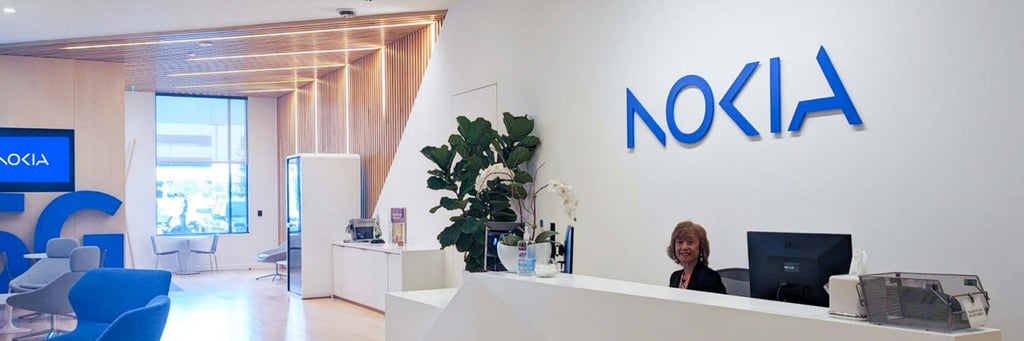
Visit to the Nokia Laboratory in Dallas
Isbel contenidos
Our colleague Rodrigo Zerpa, a Telecommunications Engineer and MBA graduate, had the opportunity to visit the Nokia innovation laboratory in Dallas, a globally recognized center for the development of connectivity technologies and critical infrastructure. This experience provided a deep immersion into how the systems that often sustain everyday life without us noticing are built, tested, and validated for interoperability.
In a highly controlled environment, Nokia conducts rigorous testing to ensure that its solutions work seamlessly with technologies from other manufacturers. This commitment to interoperability responds not only to technical standards but also to a broader vision: in an increasingly interconnected world, the ability for systems to communicate effectively is essential to guarantee reliability, efficiency, and security.
One of the laboratory's primary areas of focus is the development of technologies applied to smart electrical grids. In this context, initiatives such as VPAC (Virtual Protection Automation and Control) networks stand out. This is an emerging architecture that redefines how protection, automation, and control systems are managed in electrical substations. These solutions enable not only faster and more efficient incident response but also more intelligent management of energy resources.
A Perspective Beyond the Technical
Beyond the technical impact, the visit was an opportunity to reflect on the role of collaborative innovation in crisis prevention. A recent and relevant example was the major blackout that affected millions of people in Chile, an event that -- although it occurred before the visit -- highlighted how vulnerable even the most advanced infrastructures can be if they are not supported by reliable technologies, real-time monitoring, and international quality standards.
In this regard, initiatives led by Nokia not only prepare grids for the future but also help prevent large-scale events from recurring. Investment in innovation, interoperability, and intelligent grid management is, more than ever, a strategic priority for governments, companies, and critical infrastructure operators.
At Isbel, we value this type of experience that strengthens our team's knowledge and inspires us to continue building solutions with a forward-looking vision. Through technology partnerships, ongoing training, and a focus on the evolution of the sector, we remain committed to supporting our clients in transforming their operations toward safer, more efficient, and more sustainable models.
During the visit, Rodrigo was able to explore in depth a series of key technical concepts that today make a significant difference in modern energy systems:
-
Multi Path Protocol for MPLS: a technology that allows information to travel through multiple simultaneous routes within the network. This approach provides resilience against failures and improves the overall reliability of the system, which is critical in infrastructures where seconds can make the difference. Multi Path Protocol for MPLS: a technology that allows information to travel through multiple simultaneous routes within the network. This approach provides resilience against failures and improves the overall reliability of the system, which is critical in infrastructures where seconds can make the difference.
-
PTP Telecom and Utility profile conversion: this process enables precise translation of time signals between different profiles used in networks. Synchronization is essential in electrical systems, where even a minimal difference can cause miscoordination in protection mechanisms. PTP Telecom and Utility profile conversion: this process enables precise translation of time signals between different profiles used in networks. Synchronization is essential in electrical systems, where even a minimal difference can cause miscoordination in protection mechanisms.
-
Time asymmetry compensation: in electrical grids, not all paths that a signal travels have the same latency. Differences can cause interpretation errors that lead to false alarms or, worse, failure to detect critical events. The ability of Nokia equipment to automatically identify and compensate for these differences provides precision and operational reliability. Time asymmetry compensation: in electrical grids, not all paths that a signal travels have the same latency. Differences can cause interpretation errors that lead to false alarms or, worse, failure to detect critical events. The ability of Nokia equipment to automatically identify and compensate for these differences provides precision and operational reliability.
-
NSP (Network Services Platform): a powerful management platform that enables real-time visualization of network topology, node status, communication route latency, and other key indicators. This visibility, combined with analysis and automation tools, enables more proactive and well-informed decision-making. NSP (Network Services Platform): a powerful management platform that enables real-time visualization of network topology, node status, communication route latency, and other key indicators. This visibility, combined with analysis and automation tools, enables more proactive and well-informed decision-making.
All of these developments comply with the guidelines of the international standard IEC 61850, a framework that ensures interoperability, security, and reliability in smart electrical grids. By working on these foundations, Nokia demonstrates its commitment to technological excellence in critical environments where operational continuity allows no margin for error.
Paysandu 926CP 11100MontevideoTel: +598 2902 1477
© 2025 Isbel S.A., a Quantik® brand
Av. Ana G. Mendez 1399, km 3PR 00926San JuanTel: +1 (787) 775-2100
Carmen C. Balaguer 10El Millon, DNSanto DomingoTel: +1 (809) 412-8672
Follow us
Our Policies